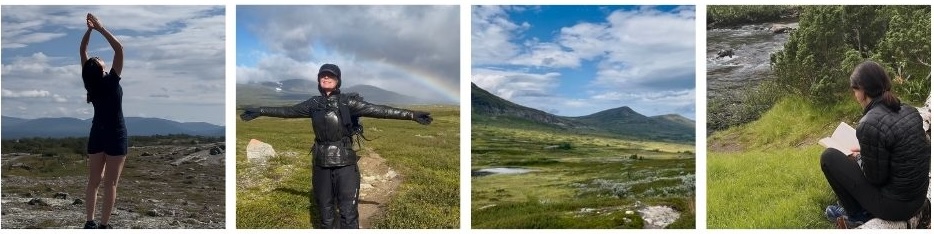
This year, I decided to take a walk on the wild side, literally by hiking into the Swedish wilderness in Jämtland. What unfolded was part adventure, part reset, and part masterclass from Mother Nature herself.
I went seeking fresh air, a challenge, and the chance to explore scenery most people never get to see. What I found was a lesson in resilience, simplicity, and just how wise our bodies really are.
A Calm Beginning
We landed in Stockholm under bright sun. The city felt spacious; people moved slower, smiled more, and seemed genuinely connected. As I wandered its streets, I noticed my own nervous system softened.
Sweden is often praised for its work-life balance, and I could feel it. In my work as a stress illness practitioner, somatic therapist and medical acupuncturist, I see every day how modern life’s pace chips away at health. Up to 70-90% of GP visits have stress as a root cause, yet we normalise constant busyness, endless emails, and late-night scrolling. Sweden, even at first glance, felt like it had found another way
Living Out of a Backpack
By the time we took the overnight train north, I was pared down to only 8.5kg on my back: food, spare clothes, sleeping bag, and a phone only for emergencies and photos. At 5am, I woke to lakes and forests sweeping past the window, and my heart fell for this country.
I wasn’t alone on this journey, my partner, who has years of experience hiking in remote conditions, was by my side. That knowledge was grounding, especially as we stepped further into the wild. Together, we carried all we needed and nothing more.
From that moment on, life was stripped back: walk, eat, sleep, repeat. My pack got lighter each day as I ate my food, and so did I. My invisible backpack, full of responsibilities, to-do lists, and mental clutter, began to loosen its grip.
Walking itself is medicine. Science tells us it lowers stress, strengthens the heart, improves mood, and reduces inflammation. Out on the trail, I felt it directly, each step helping me breathe easier and move back into balance.
Entering Jämtland
When we stepped into Jämtland, everything changed. The roads ended. No cars. No towns. The only way forward was on foot across mountains, rivers, and valleys. In this vast land, if emergencies happen, you don’t call a taxi, you wait for an airlift.
It struck me how utterly dependent we are on infrastructure in our daily lives, and how quickly it disappears in the true wild. Out here, resilience wasn’t optional; it was survival.
Encounters with Reindeer and Myself
One morning, wild reindeer appeared. They paused, sniffed, then bolted away on instinct. I stood in awe, but also curious, because we are similar. Humans, too, are wired with fight, flight, and freeze.
The trouble is, in our modern lives we use these natural survival instincts not just for danger, but for deadlines, emails, internal pressures, relationship problems and more. Chronic stress tricks the brain into overreacting. It doesn’t always know the difference between a storm on a mountain ridge and a storm of thoughts.
That reminder stayed with me: sometimes it’s not the wilderness testing us, but our own nervous system.
Weathering the Storm
Swedish summers, at least in the photos and weather predictions I had researched, looked gentle: rolling green hills, clear skies, long golden evenings. I packed layers, yes, but never truly expected the raw, punishing force of the mountains.
And then the real storm hit. Winds up to 68mph, sleet stinging my face, the chill factor minus12°C. Hiking up uneven rocks and mountains felt impossible. My body begged to stop.
But there was no stopping, no shelter on the mountain’s edge, only forward. Plan B had always been to research and mark mountain huts for possible shelter if needed. Knowing they existed gave me hope, but they were far between, and in weather like this, the only way to reach them was to keep moving.
I used the same mindset tools I share with my patients; I also found present moments of beauty even in adversity. I noticed ripples on the water, hardy reindeer grazing, frogs leaping joyfully through the storm.
When we finally reached a hut, my body froze and then trembled, not from cold (I had plenty of layers and warmth from exertion), but from releasing from freeze mode (my inbuilt survival mechanism). As a somatic therapist, I knew this was healing. I let my body shake and thaw after pushing through pure exertion in the storm.
That night, tucked in a sturdy wooden hut with other stranded hikers, eating hearty Swedish stew, I relished the reminder that connection and safety are medicine too.
Solitude, Stillness, and Singing on the Trail
Some days, we didn’t see another soul for nearly 48 hours. At first, the silence felt strange compared to normal day-to-day life. Then it became bliss. Solitude gave me space to listen, really listen to my breath, my thoughts, my body and Mother Nature.
One afternoon, I sat alone by a river, reading a chapter of a book while the current slipped past. Watching the water flow, I felt the same rhythm settling into my own body, steady, unforced, alive.
Nights under the stars brought the deepest sleep. Without alarms or devices, my body slipped into a natural rhythm, tired at sunset, awake with dawn. Research shows natural light-dark cycles improve sleep quality and restore circadian rhythm. But I didn’t need research or my insomnia training to tell me, I felt it.
Not every day was blissful. One wet, cold morning, I lost my joy and longed for warmth. My solution? Singing. For half an hour I sang a few songs, with the firm favourite and altered version “She’ll be singing round the mountain when she comes,” dancing along the trail until laughter appeared and the inner dark clouds lifted. Movement, voice, rhythm are powerful medicines too.
The River Crossing
The second challenging moment came at a wide river where the bridge had been swept away. The only way forward was through the water.
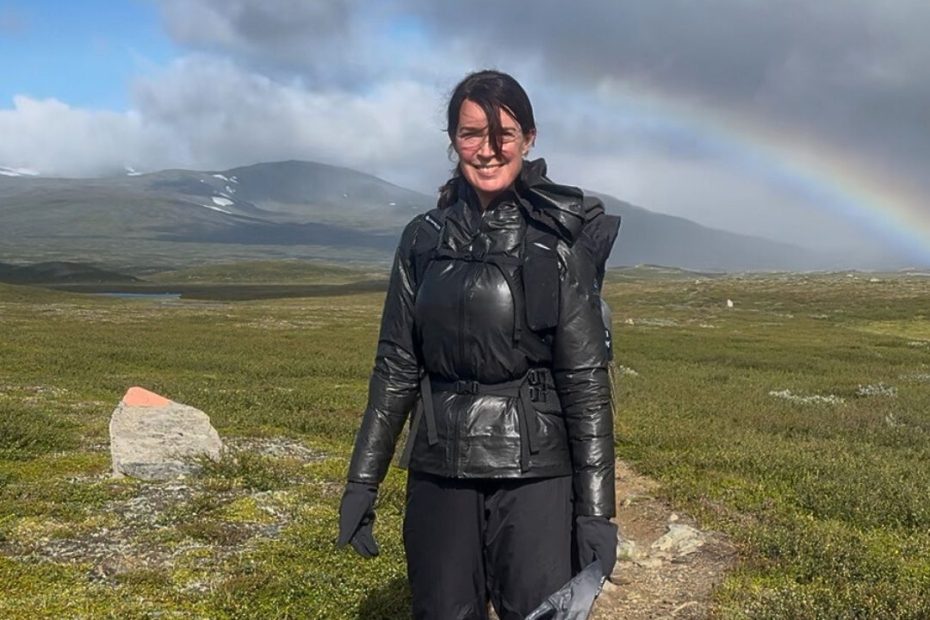
For eight long minutes, I waded slowly across, the cold water reaching our thighs. It wasn’t fast or dramatic, just steady and strong in places, careful steps, one at a time, checking our footing as we went. My legs burned with the chill, my focus narrowed to each foot finding its place, and very present I became. I remember the rainbow that appeared above as we waded.
On the far bank, I felt a surge of relief and pride. It was less about conquering the river and more about trusting my body, leaning on preparation, and recognising how capable we are when we take things step by step, with support.
Foraging, Fresh Water, and the Basics
The wild also offered small gifts. Lingonberries scattered along the trails became fuel, sharp, energising, and a reminder that nature provides what we need if we pay attention. And drinking straight from streams, cold and clear, was extraordinary in its simplicity. No filters, just water, alive and unprocessed. These moments reminded me that health isn’t always complicated; sometimes it’s found in berries on the ground or fresh water in cupped hands.
Pain and Gratitude
By day three, my Achilles was inflamed and painful. Normally I’d prescribe rest, reduced exercise, and medical acupuncture, but in the wild my only option was to keep going. Pain, I reminded myself, is not punishment, it’s protection. Sometimes the brain gets it wrong, especially with neuroplastic pain and persistent symptoms, but its goal is always safety, even if there is no real danger.
Later, when conditions were warm and clean enough, I finally treated myself with acupuncture. And yes, it certainly helped, along with dry needling to relax those tight calf muscles that clenched due to my protective limp.
Gratitude became my daily companion. A dry pair of socks, a hot meal, shelter. Research shows gratitude improves resilience, reduces stress and even lowers inflammation. Out here, gratitude wasn’t a practice, it was a natural response.
And then, after my first five days in the wild, I saw a mirror for the first time in a hut. I had completely forgotten about appearance. The person looking back at me looked alive, wiser, lighter, and just a little wild.
What Mother Nature Taught Me
By the time we returned to Stockholm, the city that once felt calm now felt busier than before. My nervous system had reset to a slower rhythm, and everything seemed too much.
In the wilderness, I learned:
- My body is wiser than I think. Pain, fatigue, even trembling are not enemies, they are protectors.
- Resilience is greater than I imagined. I kept going when I thought I couldn’t.
- Simplicity heals. Nature. Walk. Eat. Sleep. Repeat.
- Solitude nourishes the soul.
- Mother Nature provides the basics. Fresh water, food and fresh air.
- Gratitude transforms the basics into abundance.
For a short while, I stopped being a nurse working as a practitioner helping others recover from stress illness, pain and persistent symptoms and I became a human animal living in the wild. Trusting my body’s intelligence and letting Mother Nature and my nervous system be my greatest teacher.
The Swedish have a word: Allemansrätten, the right to roam. And roam I did, lighter, calmer, and more alive than before.
You don’t need glaciers, storms, or week-long treks into the mountains to reset your nervous system and increase your resilience. Simple, science-backed practices, like mind-body medicine, somatic therapy, or medical acupuncture, can help you find balance and recovery even in the middle of daily life. The wild has a way of reminding us of what matters; our job is to bring some of that wisdom home.